Collecting comics internationally means operating in a market profoundly different from the US market, with its own rules, specific opportunities and particular constraints. Whether you want to buy smart, sell at the best price, or simply understand why your comic sells for more on eBay.com than on regional marketplaces, this article gives you a complete comparative analysis of the 2026 market.
Collecting comics outside the US, particularly from Europe, means operating in a market profoundly different from the US market, with its own rules, specific opportunities and particular constraints. Whether you want to buy smart, sell at the best price, or simply understand why your comic sells for more on eBay.com than on regional marketplaces, this article gives you a complete comparative analysis of the 2026 market.
Europe has a unique comics culture: France is both a country of traditional Franco-Belgian bande dessinée (Tintin, Asterix, adult comics) and a fast-growing American comics market since the 2010s MCU boom. This duality creates very specific market dynamics any international collector benefits from understanding.
Financial warning: Information in this article is provided for educational and informational purposes. Collectible markets are volatile and past performance doesn't predict future performance. Any buying or selling decision for investment purposes must be made knowingly and with professional guidance if needed.
Market sizes: USA ~$1 billion, Europe ~$50-80M per major country
The American collectible comics market dwarfs the European one. Here are the orders of magnitude:
In the United States, the collectible comics market (including auctions, online platforms, conventions and specialty shops) is estimated at about $1 billion annually. This includes new comic sales (about $400-500 million) and the secondary collection market ($500+ million), with Heritage Auctions alone generating several hundred million dollars in auction sales each year.
In Europe, the American collectible comics market is estimated between $55 and $90 million annually per major country. It's a growing market, probably tripled in size since 2015, but remains marginal compared to the US market. By comparison, the French-Belgian bande dessinée market alone represents about $220 million annually in France, giving you an idea of American comics' relative place in European collecting culture.
Why this size difference matters for the collector
The size difference isn't just an abstract statistic. It has concrete implications for your collector experience:
- Liquidity: Finding a buyer locally for a valuable comic takes longer than in the US. The market is narrower.
- Reference prices: "Official" prices (GoCollect, GPAnalysis, Heritage) are based on American sales. They don't always reflect what you'll get on the local market.
- Availability: Some comics are nearly impossible to find locally and require importing from the US.
- Market knowledge: Non-US buyers are on average less specialized than American buyers, which can play both ways.
Differences in collecting culture
Beyond numbers, collecting cultures are fundamentally different between Europe/rest-of-world and the United States.
American collecting culture
In the US, collectible comic books are a mature industry with decades of history. The CGC system (founded in 2000) standardized comic grading and created a transparent market. American collectors have access to sophisticated tools (GoCollect, Key Collector Comics, ComicsPriceGuide), major conventions in every city, and a dense network of specialty shops. The "key issue" concept is well-established and prices are widely documented.
Comic collecting in the US is also a multigenerational phenomenon: Silver Age (1956-1969) and Golden Age (1938-1956) collections pass from father to son, and many American collectors have accumulated decades of market experience and knowledge.
International collecting culture
Outside the US, American comics collecting culture is more recent and less structured. The boom largely coincided with the MCU's success (2008-2019) and the growing availability of online information in local languages. Many international collectors started less than 10 years ago.
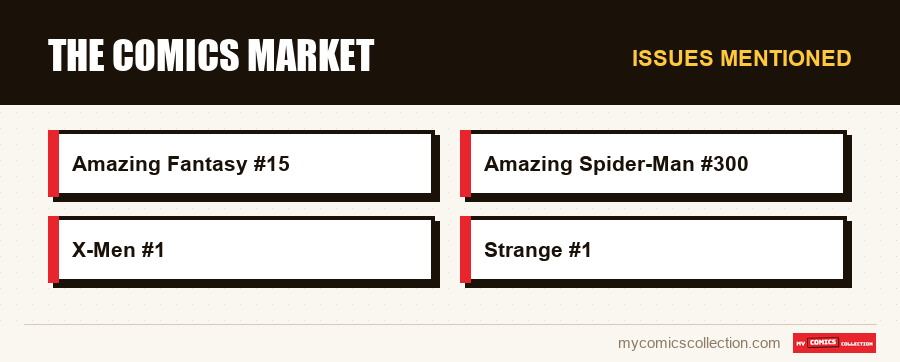
International collectors tend to focus on the most recognized key issues (Amazing Fantasy #15, Amazing Spider-Man #300, X-Men #1) rather than complete runs or niche issues valued in the US. This creates market inefficiencies, lesser-known issues in one market but valued in another, which represent real opportunities.
Many countries also have strong traditions of translated comics reading: publishers like Panini, Urban Comics and various local imprints publish omnibuses and complete runs. Many collectors start with translated trades before looking at originals.
Where international buyers get their collectible comics
Purchase channels for international collectors are multiple and each has pros and cons:
Regional eBay vs eBay.com
Your regional eBay site is the first instinct for many, but eBay.com offers a catalog 10 to 20 times larger and better liquidity. For valuable key issues, eBay.com is almost always preferable for both buying and selling. Shipping fees from the US ($8 to $25) are generally offset by more competitive prices and broader offers.
Regional conventions
Paris Comic Con, Japan Expo Europe, regional conventions offer direct buying opportunities and sometimes good deals at dealers who don't know their stock perfectly. Negotiation is possible and nice surprises exist, but prices are sometimes above the eBay market.
Specialty shops
Good VO (original-version) comic shops in major European cities know their market well but mark up their margins. Their advantage: the ability to physically examine the comic before buying, which is precious for non-graded copies.
Facebook groups and forums
Local collector groups on Facebook and specialized forums allow direct transactions without platform fees. Watch for unreliable sellers and poor-quality photos. Reserve these channels for transactions with sellers whose reputation you know.
Specialized American platforms
For high-value comics, Heritage Auctions, ComicConnect and Goldin offer superior liquidity and transparency. Fees are high (up to 20% buyer-side) but trust is maximum.
Manage your collection with global market values
Track your comics' value, updated daily, with estimates built from eBay data, available directly in My Comics Collection.
7-day free trial, no commitmentCollecting this series?
Track what you own, what you are missing and what your collection is worth. 7 day trial.
Start my trial →Comics that sell better locally than in the US
Niches exist where the regional market is stronger than the American market:
Localized editions of American comics are the most obvious case. French Lug editions (Fantask, Strange, Nova, Titans, etc.), Aredit, Semic and Pocket Série Fantastique from the 1970s-1990s have virtually no market in the US but easily find buyers locally among nostalgic collectors. A good-condition Strange #1 or a first Aredit edition can fetch $55-220 in France with no interest to an American buyer.
Comics linked to local adaptations (dubbing, TV shows that made certain characters known locally) sometimes have a specific local fan base. Characters who had strong television presence in the 80s-90s in various countries (Spider-Man, X-Men, Teenage Mutant Ninja Turtles) generate local demand for their origin comics.
Certain regional-publisher trade paperbacks (numbered editions, first editions, limited print runs) have almost exclusively local secondary markets. Few American buyers are interested.
Pros and cons of selling to the US
Pros of selling to the US
- Much larger market: Millions of potential buyers vs. tens of thousands locally.
- Generally higher market prices: Especially for key issues and CGC-graded.
- Faster sales: The American market's superior liquidity means less waiting.
- Price transparency: Real sales data easily verifiable via GoCollect or Heritage.
Cons of selling to the US
- International shipping fees: $15 to $40+ depending on size and value, plus packaging.
- Transit risks: A comic damaged during international transport is a complex dispute to resolve.
- eBay.com platform fees: Fees for non-US sellers can be higher.
- Customs declaration: The American buyer may have to pay import taxes on high purchases.
- More complex returns: Handling a return from the US is expensive and time-consuming.
Customs duties: what international collectors should know
The customs duties question is frequently misunderstood. Here's what applies in 2026 for importing comics from the US (EU-focused example):
Customs rules for importing US comics to the EU (2026)
- Declared value under €150: VAT and customs duty exemption. Most small purchases pass without fees.
- Declared value between €150 and €1,000: EU VAT at 20% applicable on value + shipping. Variable customs duties by classification (0% for books/printed matter).
- Declared value over €1,000: Mandatory customs declaration, carrier clearance fees ($11-28).
- Watch out for under-declarations: Asking a seller to under-declare value is illegal and risky (possible confiscation).
Arbitrage opportunities between markets
Arbitrage means buying on a cheaper market and reselling on a more expensive one. Between regions and the US, these opportunities exist but shrink as information globalizes.
Local-to-US arbitrage: Undervalued issues on local markets (because the seller doesn't know the American price) can be bought and resold at profit on eBay.com or Heritage Auctions. This requires good knowledge of American prices and shipping logistics. Regional conventions have historically been the best ground for this kind of arbitrage.
US-to-local arbitrage: Comics little-demanded in the US but locally sought (regional editions, certain translations) can be bought at low prices on the American market and resold locally. Rarer case but possible.
To identify the best opportunities, see our article on the 10-year evolution of comic values and our comics investing guide.
Essential tool: To know the "American market value" of your comics before deciding where to sell, use GoCollect.com and Heritage Auctions sales archives. These data are based on real transactions and constitute the international reference.
FAQ, Comics Market Regional vs. USA
Sell at the right price, in the right place
Know the exact value of every comic in your collection before deciding where and how to sell. My Comics Collection aggregates global market data to give you the fair price.
7-day free trial, no commitment