The best robots and artificial intelligences in comics are, at the top, Vision , Ultron , Brainiac and Cyborg. This tier list classifies the synthetic beings of the comic book universe according to their importance, their power and their stories. Facts (publisher, creation) verified, no invented ratings; each character refers to its file when it exists.
Robots and AI haunt comics: they question humanity, consciousness and the technological threat. This tier list classifies these synthetic beings according to their narrative importance, from melancholic hero to digital genocidal. Criterion: the weight of the character in his universe.
Editorial Ranks, Facts verified. Each character refers to its file when it exists.
Collecting this series?
Track what you own, what you are missing and what your collection is worth. 7 day trial.
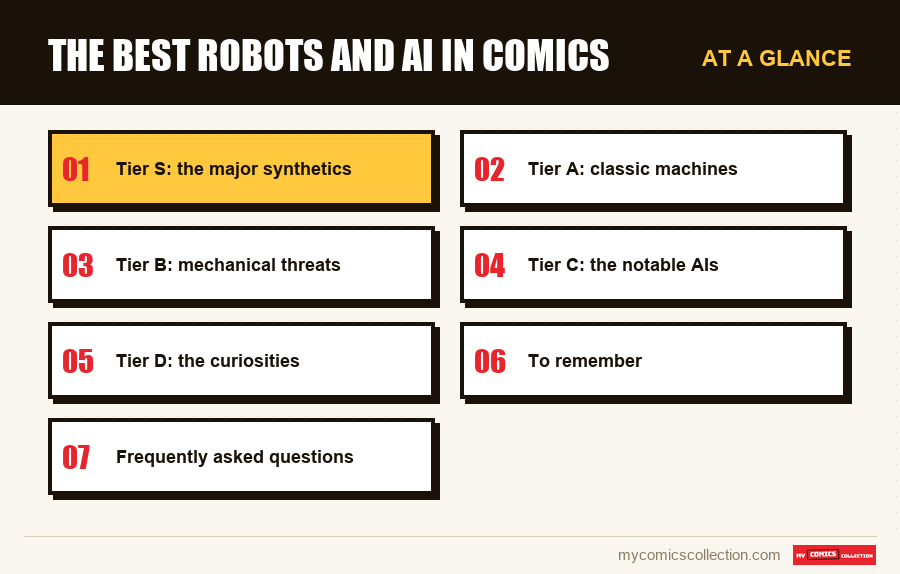
Start my trial →Tier S: the major synthetics
Vision is Marvel's most human android, searching for a family: the subject of one of Tom King's best runs. Ultron is its genocidal creator, AI obsessed with human extinction. Brainiac threatens Krypton and Earth with its cold intelligence, and Cyborg embodies the man-machine fusion at DC.
Tier A: classic machines
Red Tornado (android from the Justice League), Amazo (which copies the powers), Machine Man (creation by Jack Kirby) and Metallo (the robot with the heart of kryptonite) are major figures.
Tier B: mechanical threats
Nimrod , the Sentinels (mutant hunters), Doombots and the Awesome Android embody the recurring technological threat of comics.
Tier C: the notable AIs
Warlock (New Mutants), Jocasta , Hazard (the Danger Room became conscious) and Robotman (Doom Patrol) complete the selection.
Tier D: the curiosities
H.E.R.B.I.E. (the robot from Fantastic Four), Victor Mancha (Runaways) and Skeets (the Booster Gold robot) closes this tier list: more discreet but very real AIs.
To remember
- Vision and Ultron form the most fascinating creator/creation duo.
- AI questions humanity: this is the great theme of the genre.
- Avengers #54-55 (1st of Ultron) and Avengers #57 (1st of Vision) are key numbers.
- Each character refers to its file when it exists.
Robots and AI in comics: landmarks for reading and collecting
Synthetic beings span more than sixty years of publishing. The tier list ranks them by importance; here is how to place them in time and where to enter their stories.
Three chronological waves
- Late 1950s to the 1960s: Brainiac (1958), Metallo (1959), Amazo (1960), then Doombot, Awesome Android and Robotman (1963), the Sentinels (1965), and finally Vision, Ultron and Red Tornado (1968).
- 1970s and 1980s: Machine Man and Jocasta (1977), H.E.R.B.I.E. (1978), Cyborg (1980), Warlock (1984), Nimrod and Skeets (1985).
- 2000s: Danger and Victor Mancha (2005).
Robot, android, AI: why the distinction matters
They are not all alike. Vision is an android, a synthezoid created by Ultron, and his quest for humanity sets him apart from a mere robot. Brainiac threatens through cold intelligence, Cyborg embodies the fusion of man and machine, and the Sentinels are mutant-hunting machines. Knowing which kind of character you are dealing with helps you spot similar ones.
A duo to read together
Ultron and Vision form the most fascinating creator and creation duo in the genre. Avengers #54-55 contain Ultron's first appearance and Avengers #57 Vision's: three consecutive issues worth reading in one go. To continue, Tom King's run devoted to Vision reads like a family story.
Where these characters live
Many synthetics did not first appear in their own series. Warlock comes from the New Mutants, Robotman from the Doom Patrol, Danger from the X-Men (she is the Danger Room become sentient), H.E.R.B.I.E. from the Fantastic Four, Victor Mancha from Runaways and Skeets from Booster Gold. Machine Man, for his part, is a creation of Jack Kirby. Search by character rather than by title.
Collecting checkpoints
- A first appearance is often found in a team series: check the exact issue number before buying.
- Characters from the 2000s, such as Danger and Victor Mancha, are more recent: supply is more plentiful than for the figures of the 1960s.
- Several characters exist in multiple versions: make sure of the version you are after.
- Keep a short checklist per character: name, series, issue and year.
Frequently asked questions
Vision is most appreciated for its emotional depth. Ultron is the most striking on the antagonist side, and Brainiac DC side.
Vision is an android (“synthezoid”) created by Ultron. His quest for humanity and emotions is precisely what distinguishes him from a simple robot.
In Avengers #57 (1968), a key issue sought after by collectors, especially since the television series dedicated to it.
Do you own Avengers #57 or another robotic key issue? Estimate its value for free with our tool based on current eBay listings.