Quicksilver: a median located above all identifiable examples
On August 30, 2026, a search for "Quicksilver Avengers 16 1965" on a US general auction site returned 41 unverified listings, with a median of $150.00. However, the four advertisements that we actually managed to identify as the booklet we were looking for asked for $38.75, $39.95, $69.99 and $70.00: all located below this median. In other words, the central indicator describes a whole which is not the one we think it measures. The median does not correct a poorly cut perimeter, it disguises it.
We repeat, rightly, that you should not read the highest price in a list of advertisements. An isolated maximum expresses what a seller hopes to get, not what a buyer has agreed to pay. The usual advice then consists of switching to the median, deemed insensitive to extreme values. This advice is exact on an arithmetic level and yet insufficient on a practical level, because it says nothing about the perimeter over which the calculation is made. A robust median applied to a poorly defined population remains a false median.
The survey carried out on August 30, 2026 around Quicksilver and Avengers issue no. 16 from 1965 provides an unusually clear demonstration of this. The following amounts are sums claimed by sellers in current advertisements on a general auction site in the American market. These are not done deals. They were recorded only once, on a single date: nothing in what follows allows us to assert that a price rises, falls or stabilizes, and I will not claim this at any time.
What exactly the August 30, 2026 statement shows
The query “Quicksilver Avengers 16 1965” returned 41 ads classified as unverified. The range is considerable: $5.42 for the cheapest, $799.99 for the highest, and $150.00 in the middle. Next to it, a second, much smaller set grouped together the verified copies: 11 listings only, from $107.46 to $2,556.00, with a central value of $300.00. Two distinct populations, two scales, and already a difficulty: these eleven announcements are too few in number to support the slightest conclusion on a price level. I will come back to this, but I might as well state it right away rather than suggesting that the figure of $300.00 would be a reference.
Let's take the unchecked set, the one with 41 rows. By going through it ad by ad, we retain those whose title unambiguously designates the booklet sought. There are four of them. « Avengers #16 Hawkeye Scarlet Witch Quicksilver Join Team 1965 » to $38.75. « Avengers #16 Hawkeye Quicksilver Scarlet Witch join team! 1965 » at $39.95. « AVENGERS #16 MAY 1965 NEW LINEUP » at $69.99. And « AVENGERS 16, 1965. Key First New Avengers Line-up, cutout parts of ads in back » at $70.00. Four amounts between $38.75 and $70.00, for an overall median of $150.00.
The observation is stark: the median is higher than the most expensive of the copies that we managed to identify. Not slightly higher: more than double the lowest amount, and still well above the highest of the four. A reader who trusted the central statistics without opening the ads would have left with an order of magnitude that does not correspond to any of the offers he could actually examine.
Why the median can end up above everyone else
The filter brings back more than what we ask for
A text query catches any heading containing the entered words, in any order and in any context. Nothing requires a result to relate to the specific issue in question. Out of 41 lines, only four were identified with certainty as such.
Intruders are not randomly distributed
If the noise were symmetrical, it would compensate around the center. Here it is not: the adverts actually recognized are all located on the same side, below. An oriented distortion shifts the middle and no indicator of central tendency resists it.
The minimum itself deceives
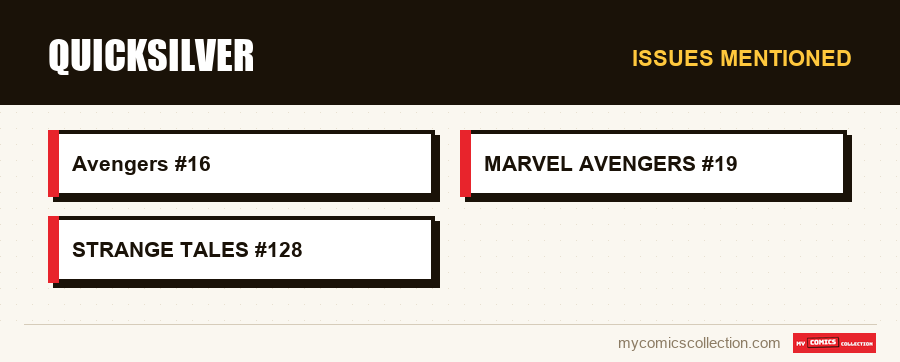
The cheapest listing in the set, at $5.42, is not the number you're looking for: It's a lot billed as "1965 MARVEL AVENGERS #19 + STRANGE TALES #128." The bottom of the range therefore comes from a different object, which is enough to disqualify the reading by the limits.
The top doesn't measure anything either
$799.99 in the unverified set, $2,556.00 in the verified copies: these amounts say what a seller displays, at a given moment, without any compensation having been manifested. They don't see a price, they make a request.
The conclusion to be drawn from this is not that we should prefer one figure to another: replace the median with the average, or with the first quartile, or with the minimum. The problem is not the choice of the indicator, it is upstream: the whole on which we calculate has not been inspected. As long as this inspection work has not taken place, any statistics produced on these 41 lines inherit their heterogeneity, whatever its formula.
The correct reaction is to open the ads one by one and only keep those where you recognize the object. It's tedious, it takes a few minutes, and it's the only operation that transforms a list of results into a usable basis for observation.
A statistical indicator calculated on a set that we have not looked at is worthless. It gives the appearance of a measure without having the substance, which is worse than the absence of a figure: we rely on it.
Eleven verified advertisements: a workforce which prohibits conclusion
The second set, that of verified copies, seems more reassuring. It excludes some noise by construction and has a central value of $300.00. But there are only eleven announcements. Eleven is a squad on which the movement of a single line is enough to make the center move visibly. There is no reason to treat it as a reference.
I therefore refuse to draw a price level from it, and I recommend doing the same. This is not a stylistic precaution: it is the direct consequence of the size of the group. A reader who would include $300.00 in their list on the grounds that this figure comes from verified ads would be making the same mistake as someone who would have withheld $150.00, just with an added veneer of rigor.
It should also be kept in mind that these eleven lines, like the forty-one others, are amounts claimed as of August 30, 2026. The verification concerns the state or authentication of the copy, not the fact that a transaction took place. A verified copy listed at $2,556.00 remains a seller's request until someone accepts it.
Finally, a single survey does not draw any trajectory. Comparing $150.00 and $300.00 does not reveal progression: they are two different sets observed on the same day, not two snapshots of the same set on two dates. Any dynamic reading of these figures would be an invented reading.
The flaw that no cover photo shows
The fourth ad identified deserves attention for a reason that has nothing to do with its price. Its title indicates that parts of advertisements have been cut out from the back of the copy. This is information voluntarily given by the seller, and it relates to something that no cover image can reveal.
Old booklets commonly included elements intended to be detached: coupons, return vouchers, advertising inserts intended to be cut out and mailed. A reader in the sixties who used these elements was doing exactly what the editor expected of him. The result, decades later, is a copy amputated of pages or fragments of pages, the exterior of which can remain perfectly presentable.
This is where the mechanism becomes concrete for those who buy remotely. An ad illustrated with a single cover photo does not allow you to know whether the interior is complete. The defect exists, it is decisive, and it is invisible in the image provided. Asking for photos of the interior pages is therefore not an excessive precaution: it is the only way to verify a characteristic that the cover does not document.
Note in passing that the seller of the $70.00 ad chose to mention this defect in his title. This transparency is not found in the titles of the other announcements, which does not mean that the other copies are intact: simply that we know nothing about them. The absence of a mention is not a guarantee, it is an absence of information.
Points to check before retaining a number
Does the ad designate the object correctly?
Read the full title, not just the price listed next to it. Of the 41 results of the survey, only four could be unambiguously identified as the booklet sought.
When was the measurement taken?
A reading bears a date, here August 30, 2026. Without it, it is impossible to know whether we are looking at a fresh observation or a figure copied several months earlier.
Amount claimed or transaction?
All values cited here are amounts requested by sellers. None notes an agreement between two parties, and this distinction entirely changes their scope.
Is this a copy or a batch?
The $5.42 ad grouped together two different issues. A lot sets a price for a set, not for the part we are looking for, and mechanically distorts any lower limit.
How many lines behind the number?
Eleven verified ads are not enough to establish a level. An indicator without its number is truncated information: the number of observations is part of the result.
Has the interior been shown?
Advertisements cut out on the back are not seen in any cover photos. Claiming interior page views is the only way to remove this doubt before purchasing.
Collecting this series?
Track what you own, what you are missing and what your collection is worth. 7 day trial.
Start my trial →What to note and save in your collection
Write the perimeter along with the number. A value of $150.00 noted alone is indefensible six months later. The same value accompanied by the mention “median of 41 unsorted announcements, Quicksilver Avengers 16 query, August 30, 2026” can be read unambiguously and corrected. It is not the precision of the amount that counts, it is the traceability of its origin.
Distinguish what you inspected from what you copied. The four listings identified between $38.75 and $70.00 were opened and recognized one by one. The median of $150.00 was read on a summary. These two figures do not have the same status and should not appear in the same way in your notes, otherwise they will become interchangeable over time.
Note the count next to each central value. Writing “$300.00” without specifying “out of 11 ads” amounts to presenting as solid a figure that a single movement is enough to move. The headcount is not a footnote, it is what indicates how much credit to give to the result.
Record internal defects reported by the seller. The mention of cut-out advertisements on the back concerns a specific copy and conditions the comparability of its price with others. If you put $70.00 in your list without this clarification, you will later align this amount with copies whose interior is complete.
Date the line, without exception. The survey described here was carried out only once. He says nothing about what happened the day before or what will happen next, and he doesn't pretend to. An undated value always ends up being read as current, which turns a one-off observation into a statement about a trend that no one has measured.
No, and that’s precisely the trap. The problem is not the formula but the whole to which it applies. An average, a quartile or a minimum calculated on the same 41 lines would inherit exactly the same perimeter defect. The median becomes a good tool again once the measured population has been inspected and cleaned.
Because it does not necessarily relate to the desired object. In the August 30, 2026 statement, the line at $5.42 was a lot combining Avengers No. 19 and Strange Tales No. 128. Using this amount as the lower limit of the booklet sought would amount to giving it the price of a different set.
They are based on eleven advertisements, which is too few to deduce a price level. This figure describes the central position of a very small group of offers on a given date, nothing more. Treating him as a reference would give him an authority that his numbers do not justify.
Looking inside, never the cover. Old fascicles contained elements intended to be detached, and their absence leaves no trace visible from the outside. The only reliable approach is to request photographs of the interior pages before committing, including when the advert does not indicate any defects.
Not at all. An observation taken on a single date provides a photograph, not a movement. It would take at least two comparable surveys, carried out over an identical area and on separate dates, to start talking about evolution. Nothing here meets this condition.
Reconstruct a clean perimeter, announcement after announcement
The work described in this article takes place in a single operation: going from 41 lines accepted as is to 4 lines recognized. It's not very spectacular and it changes everything, since the useful interval goes from « quelque part entre 5,42 $ et 799,99 $, centré sur 150,00 $ » to « quatre offres observées entre 38,75 $ et 70,00 $ ». The second formulation is more modest and infinitely more honest, because it names what it describes.
This discipline requires knowing what you are looking for before launching the query. A collector who knows the character's notable appearances immediately spots off-topic titles, while someone who discovers the subject takes the list at face value. Document yourself in advance via the history of the character in comics ou les notable runs that feature him is not a detour: this is what makes the inspection possible.
The difficulty gets worse for characters who cross multiple titles. The same name can appear in very different series, and the ad titles then mix unrelated objects. It is a general mechanism, independent of any number: the more a character is present in crossed stories between several titles, the more results a textual query produces to be discarded, the more the gap widens between raw statistics and observable reality.
A solid research method therefore relies less on keywords than on a pre-established list of what we want to acquire. Construct this list from a collection guide dedicated to the character allows each ad to be checked against a known reference rather than against a hunch. We no longer ask the search engine to determine what is relevant: we already know it, and the engine is only used to find copies.
The same reasoning applies to titles with a high density of searched numbers, where the ambiguity between neighboring issues is constant. Become familiar with the structuring issues of the Avengers series ou avec l'histoire d'ensemble du titre mechanically reduces the risk of confusing two lines of a results list. Again, it's not a question of flair but of preparation.
What this observation changes in the management of a collection
A collection kept seriously contains values written opposite the booklets. The statement of August 30, 2026 shows that these values are not equal to each other: some come from a line-by-line examination, others from an aggregate figure copied without control. If there's nothing to distinguish the two in your notes, they'll end up looking the same and you'll have no way of knowing which one is worth trusting.
It's a problem of memory as much as of method. At the moment, we know perfectly well where the figure we have just written comes from. Six months later, only the number remains. The mention of provenance (inspected whole or raw statistics, number, date, nature of the amount) is what allows your future self to reread your work instead of having to redo everything.
It is not a question of giving up on indicators. A median calculated on a clean set remains one of the most useful tools available to a collector, precisely because it copes poorly with outliers. The point is to stop considering it as a remedy: it corrects the presence of a few extreme prices, never an error in the definition of the group measured.
Finally, there remains the use we make of these values. A number entered in a collection is used to decide: buy, wait, insure, transmit. A decision based on $150.00 when identifiable offers were between $38.75 and $70.00 will not be slightly off, it will be made in a universe other than that of the observable market. The distance between the two is exactly the value of the inspection work.
Keep track of your statements, not just your numbers
My Comics Collection allows you to attach a value to each issue, its collection date and how you obtained it. You will find out, months later, whether an amount is based on ads that you have actually inspected or on a raw statistic, and you know how much credit to give it.